
Dev Blog: Node by Node
A look behind the scenes at one of the tools we’ve built to help configure the world of Horizon.
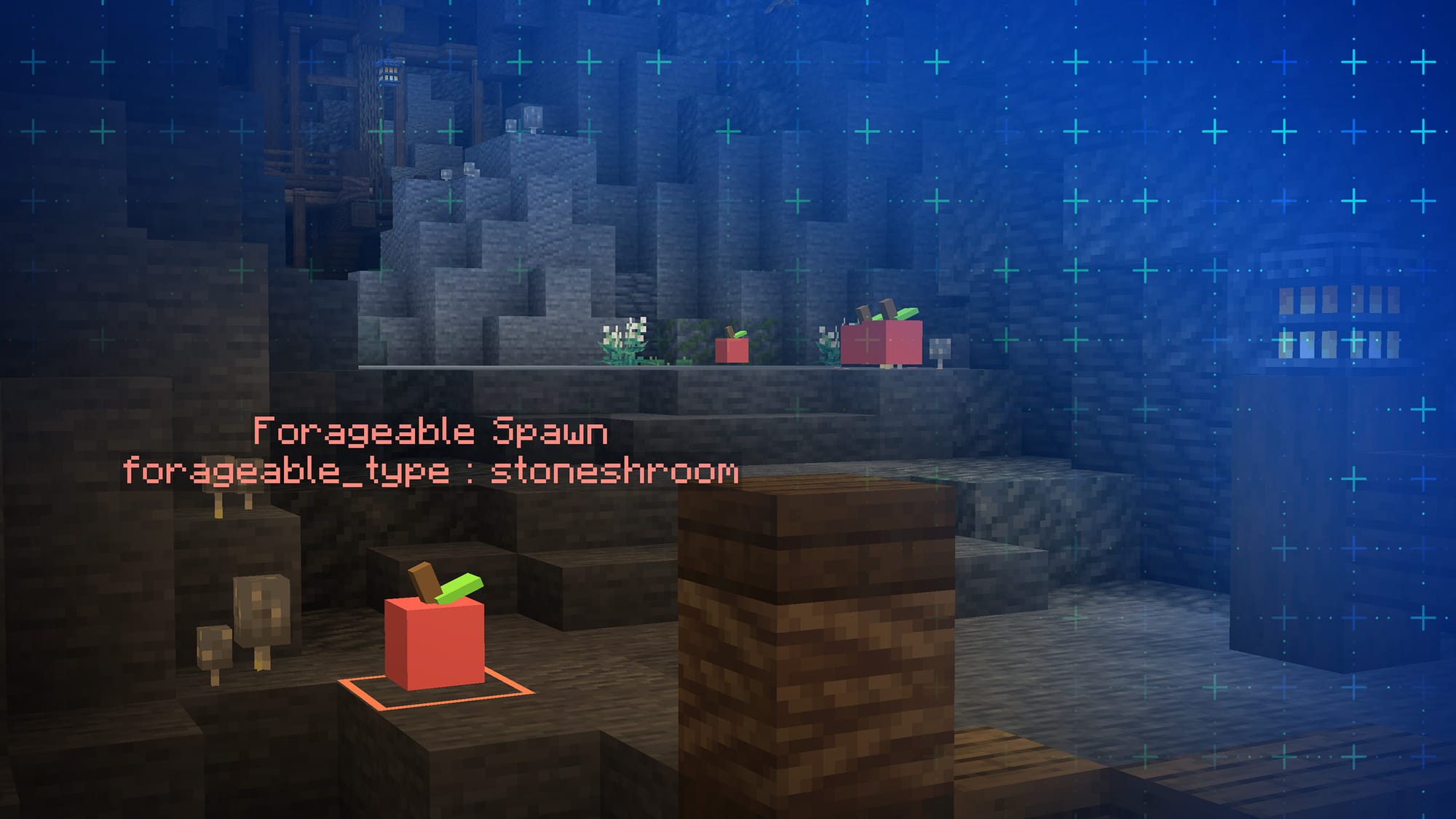
Technology has always been a big part of Hive Games. From our fully custom Minecraft-compatible server software to the internal tools that support our team, we put a lot of work into building custom tech that helps us create better experiences for players.
SkyBlock Horizons is no exception. A game of this scale comes with plenty of technical challenges, and solving them has meant building new systems, tools, and workflows.
In this dev blog, we’re going to draw back the curtain and take a look at one part of that process: configuring a large open world.
Configuring worlds can be time-consuming, especially when they have as many data points as an MMO. For SkyBlock Horizons, we wanted to avoid relying on manually written configuration files, which can be slow to work with and easy to get wrong.
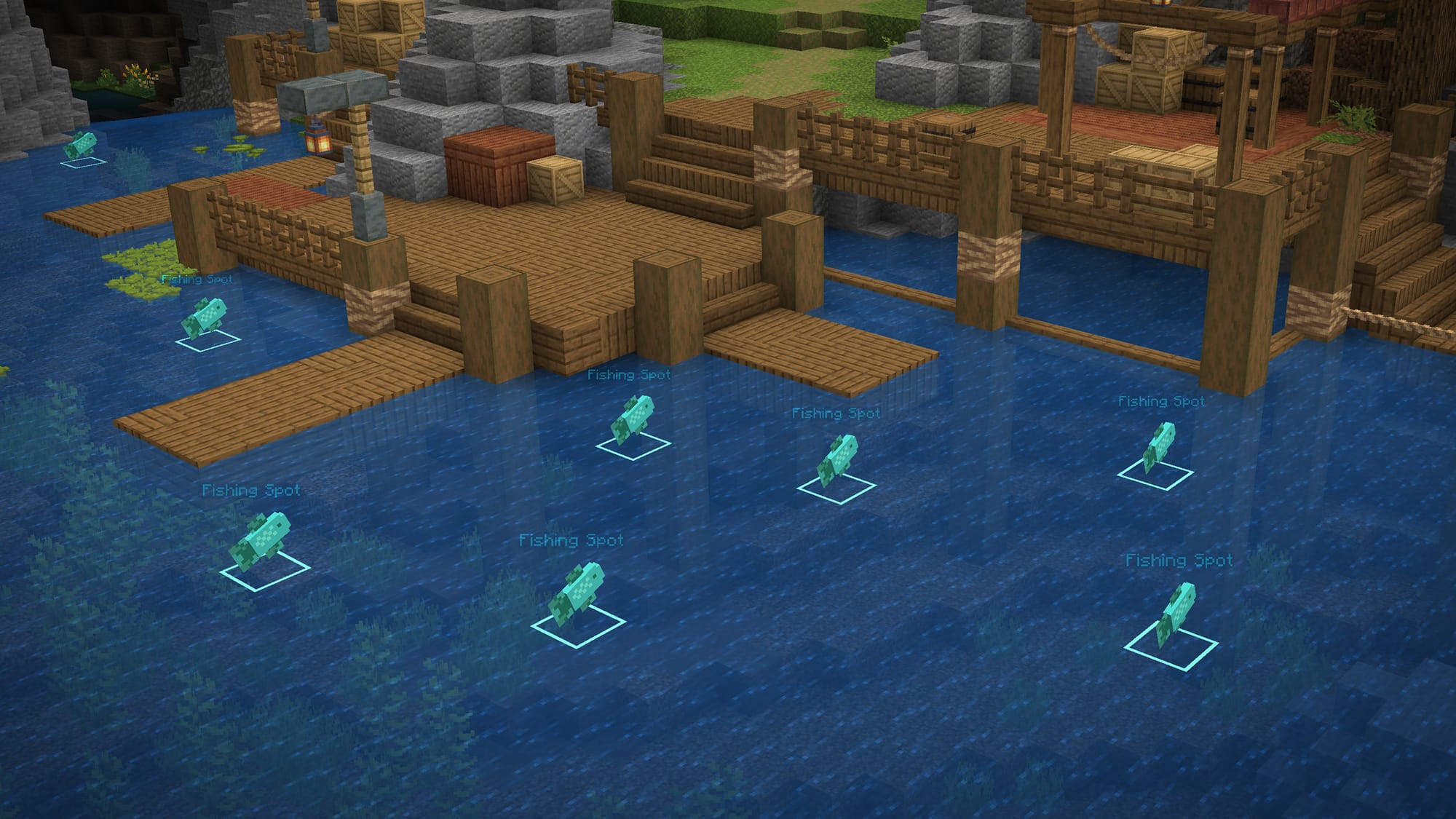
We also wanted to give our build team more technical control of the world, without pulling them out of their usual workflow. That meant our config system needed to work natively while the world was being built, giving us something closer to a game engine editor like Unreal or Unity, where designers and builders can configure parts of the world directly in context.
Axiom, by Moulberry, is already a key tool for our team. We build all of our world on Java Edition. Since Axiom turns Minecraft: Java Edition into a powerful world editor, it made sense to integrate our node editing tools directly into it. So that's what we did.
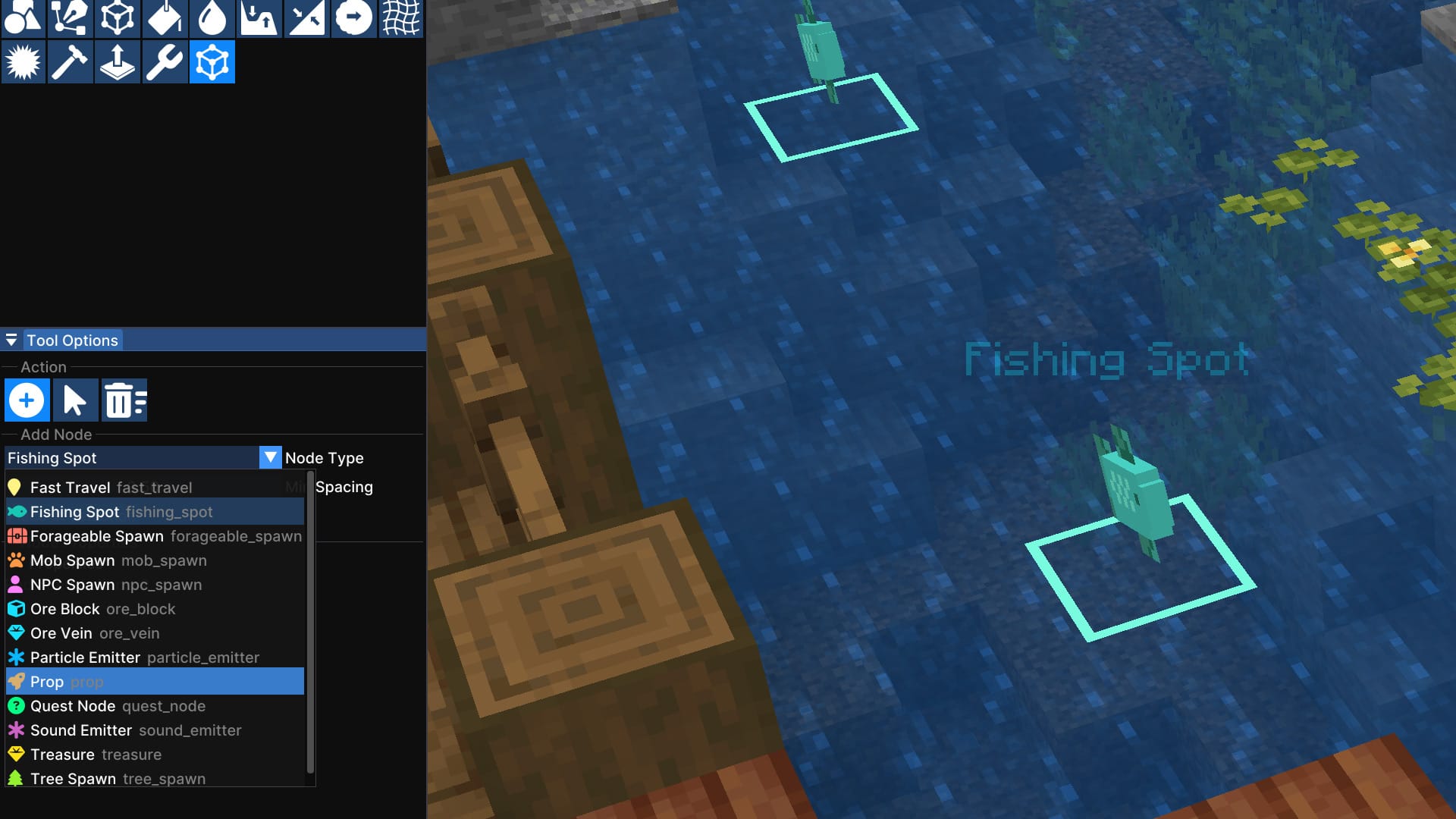
Horizon nodes can be placed directly in the world using a simple Axiom tool. Select a node type, fill in its properties, then right-click to place it. Nodes can be undone, redone, moved, and edited, and are exposed through a dedicated API so they are instantly available across our SkyBlock Horizons dev instances.
We use nodes for everything from NPC and resource spawns to particle and sound emitters, making them a key part of building an immersive world.
This is just one of many tools we’ve built for SkyBlock Horizons, and we hope to share more of them in future dev blogs. At least, if they’re interesting enough.